
Nonprofit CEOs, Visibility, and the Real Trust Question
Nonprofit CEOs are juggling strategy, fundraising, boards, staffing shortages, public scrutiny, and rising community needs.
When someone says, “You should also be building your personal brand,” the reaction is understandable: With what time?
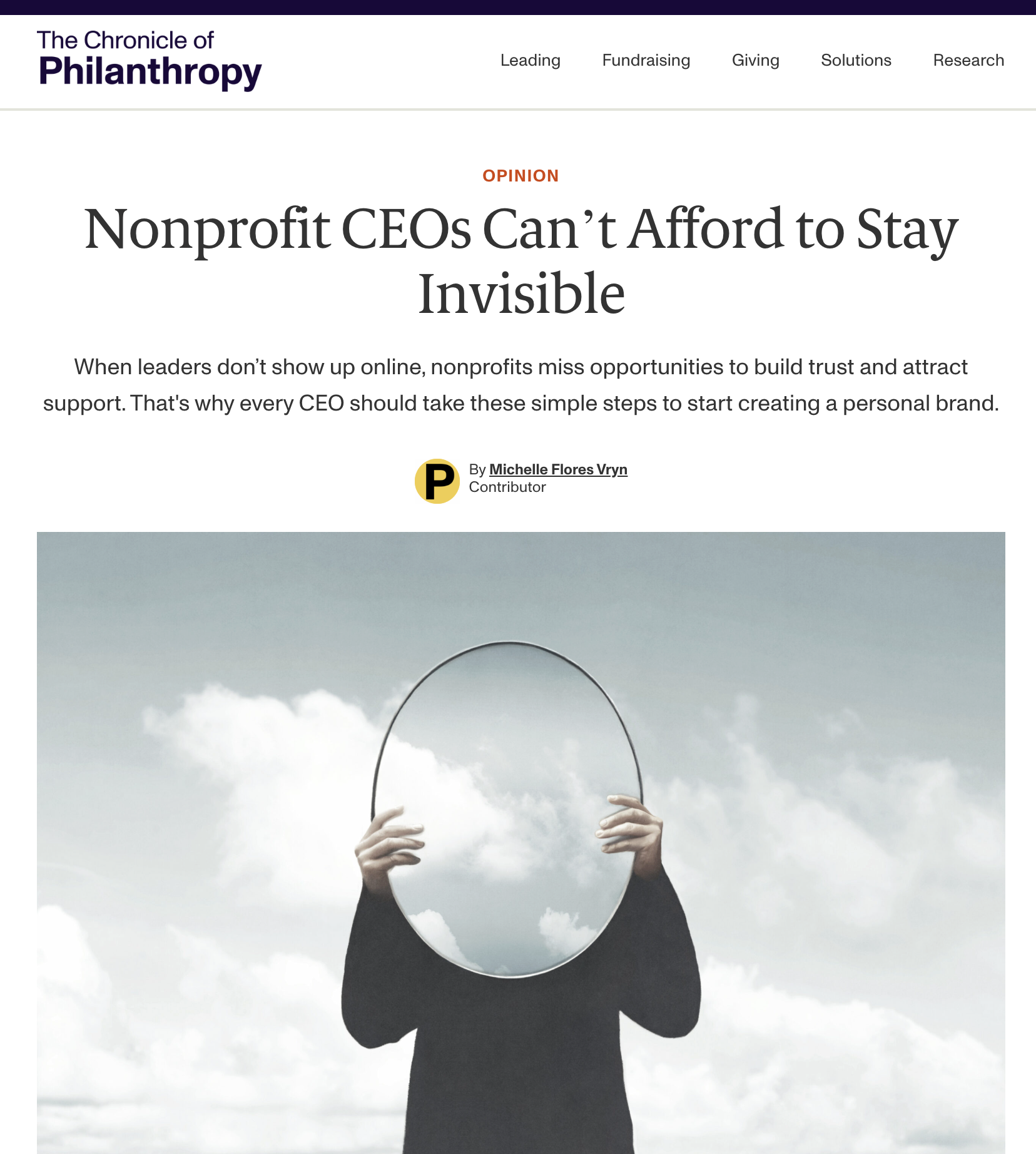
An opinion piece in The Chronicle of Philanthropy argued that nonprofit CEOs “can’t afford to stay invisible.” The headline sparked a wave of thoughtful discussion across LinkedIn — and what emerged wasn’t hype or defensiveness. It was nuance.
This isn’t a debate about ego, it’s about trust.
“Should donors trust the CEO or the organization?”
One of the strongest counterpoints raised by leaders was this:
Should donors trust the CEO — or the mission itself? It’s a fair question.
Tying visibility too closely to one individual can feel risky. Leaders leave. Reputations shift. Boards change direction. If donor trust is anchored to a single personality, what happens during transition?
That concern shouldn’t be dismissed. But it may be slightly misframed.
The real issue isn’t whether a CEO should be visible. It’s whether the organization has built trust systems that are resilient enough to withstand change.
If visibility creates fragility, the institution wasn’t structurally sound to begin with.
The Bigger Context: Institutional Trust Is Down
What many leaders, myself included, have been saying is this:
Trust in institutions is declining across sectors.
But people still trust people.
Leadership communication now plays a different role than it did a decade ago. (It doesn’t mean nonprofits need influencers).
Discovery happens online.
Reputation is reinforced online.
Strategic decisions are interpreted online.
Silence doesn’t preserve neutrality. It often creates invisibility.
Burnout is real.
Visibility is a skill.
Another powerful thread in the discussion came from nonprofit leaders who admitted something vulnerable:
They’re afraid to get it wrong in public.
Leadership today is already hyper-visible. Add social media to the mix, and the stakes feel higher. For many CEOs — especially those who aren’t founders — showing up online feels uncomfortable, risky, or simply overwhelming.
And that’s where the conversation becomes productive.
Visibility isn’t a personality trait, it’s a skill.
It can be learned, structured, supported.
What nonprofit leaders don’t need is pressure — they need capacity.
Founder CEOs vs. Stewards of Legacy Institutions
One nuance that surfaced repeatedly: It’s easier for founders.
When you built the organization, your story and the mission are intertwined. But most nonprofit CEOs are stewards of legacy institutions. They inherited the vision. They answer to boards. They operate within governance constraints.
For them, visibility requires more intentional design.
It can’t be about self-expression. It must be about stewardship.
The False Binary: CEO vs. Mission
The discourse often slips into a false binary: Either the mission is the hero, or the CEO is.
That’s the wrong framing. In healthy organizations:
The mission remains central.
The CEO translates strategy and context.
Senior leaders share program insights.
Institutional channels amplify outcomes.
This is what we often describe as visibility architecture.
Not one loud voice. A coordinated system of trust-building.
When done well, leadership visibility strengthens the institution. It doesn’t overshadow it.
The Cost of Silence
Several nonprofit leaders shared that they had been “behind the scenes” for decades — solving problems, building programs, raising funds quietly.
But if your story isn’t being told, someone else’s is.
And in a crowded ecosystem where thousands of organizations are doing meaningful work, silence has an opportunity cost.
One leader shared that LinkedIn has been a key driver of their nonprofit’s growth. Others admitted they’ve delayed sharing because operational tasks always take priority.
That’s understandable. But attention is now part of the operating environment. As leverage, not vanity.
What this really means for Nonprofit leaders
What’s the takeaway?
Visibility must be intentional, supported, and aligned.
Here’s what that looks like in practice:
Mission first. Always.
Leadership communication should clarify and contextualize the work — not center the individual.Design for durability.
Build distributed visibility so trust doesn’t collapse when leadership changes.Match expectations with support.
If boards expect CEOs to be visible, they must allocate capacity accordingly.Start small.
One thoughtful post every two weeks can create more clarity than reactive commentary.Treat visibility as governance, not marketing.
Transparency, context, and storytelling are part of leadership responsibility now.
Visibility is not about ego — it’s stewardship.
The most compelling insight from this entire debate is this:
Leaders don’t resist visibility because they’re arrogant. They resist it because they’re cautious.
They care about the mission and they fear overshadowing it. They worry about dependency, optics, and mistakes. That caution is healthy — but invisibility doesn’t protect the mission, it limits its reach.
The future of nonprofit leadership is clearer (not just louder).
And clarity — delivered consistently and thoughtfully — compounds.
If nonprofit leaders are going to navigate this shift well, they’ll need training, systems, and strategic alignment.
Because being seen is no longer optional in the public square.
But how you are seen — and how that visibility strengthens your institution — is a design decision.
That’s a leadership conversation worth having.
Keep learning with our resources and support.
Get our free guide on personal branding and thought leadership for nonprofit leaders.
Whether you’re the CEO or you’d like a strategy for your leader, reach out to The Good Growth Company for one on one consulting and strategies that work for your organization.
