The Shifting Giving Landscape in 2026: What Nonprofits Need to Know
Top Takeaways from
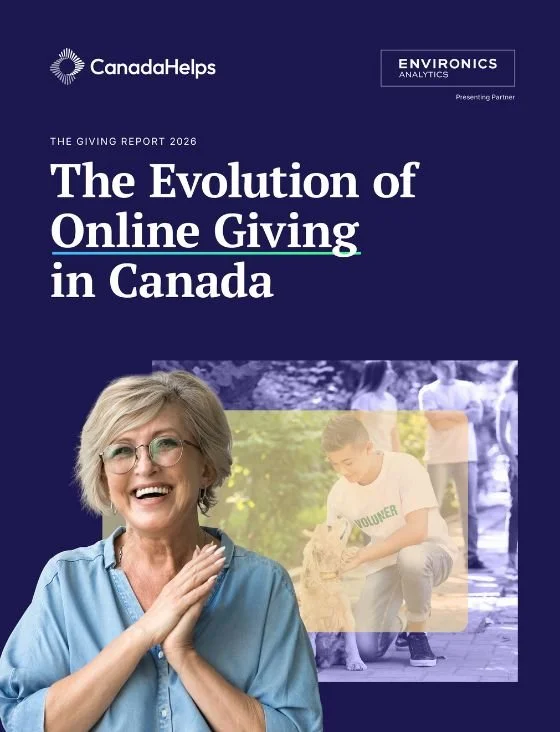
The Giving Report 2026
Canada’s charitable sector is under pressure. Demand for services is rising. Teams are stretched. Competition for attention and donations is intense.
At the same time, new data from CanadaHelps’ The Giving Report 2026 shows something important:
Online giving in Canada is still growing — but the way people give is changing quickly.
For nonprofits, this matters because many of the assumptions organizations have relied on over the last decade are shifting:
where donors live
how they give
what causes are growing
who is participating
and what kinds of relationships donors want with organizations
The organizations that adapt early will be in a much stronger position over the next few years.
The Good Growth Company is breaking down some of the top 7 takeaways you need to know from this year’s edition of the report.
1. Online giving had its strongest year since the pandemic
CanadaHelps reported that donations through its platform reached $529 million in 2025, up 10% year-over-year — the largest annual increase since the pandemic surge.
Even more notable:
donor participation increased for the first time since 2020
monthly giving grew 82% since 2020
securities donations grew 361%
GivingTuesday donations increased 59% since 2020
This is not just “more donations.” It’s a structural shift in donor behaviour.
The takeaway for nonprofits: Digital fundraising is maturing.
Online platforms are no longer just for small one-time gifts. They are increasingly becoming channels for recurring support, major gifts, and long-term donor relationships.
2. Monthly giving is becoming one of the most important fundraising strategies
One of the clearest trends in the report is the rise of monthly giving.
Monthly donations through CanadaHelps grew from $51 million to $93 million between 2020 and 2025. The percentage of donors giving monthly has also doubled, now representing more than 15% of all donors on the platform.
This matters because monthly donors:
tend to give more overall
are easier to retain
create more predictable revenue
deepen long-term engagement with organizations
Many nonprofits still treat monthly giving as a secondary campaign or “donate monthly” checkbox. Increasingly, it should be treated as a core growth strategy.
Organizations should consider:
stronger onboarding journeys for first-time donors
more visible monthly giving calls-to-action
impact storytelling specifically designed for recurring supporters
creating community and belonging around monthly donor programs
The organizations that build sustainable recurring support systems will likely become more resilient over time.
3. Major gifts are increasingly happening online
One of the most surprising findings in the report is the growth of securities donations.
Just 3,894 donors gave more than $83 million in securities, accounting for 16% of all donations on CanadaHelps. That growth is massive.
Historically, securities donations were often associated with large institutions and ultra-high-net-worth donors. But the report suggests that digital platforms are making this form of giving more accessible. This creates a major opportunity for nonprofits.
Many organizations still:
rarely mention securities giving
don’t explain it clearly
bury it deep on their website
or assume it’s only relevant for very large charities
The report suggests otherwise.
Even smaller organizations should think about:
adding securities giving information to their “Ways to Give” page
including it in donor communications
educating loyal supporters about tax-efficient giving
simplifying the process wherever possible
Reducing friction matters. One of the biggest themes throughout the report is that donors are willing to give more when giving is easier.
4. Local organizations are gaining momentum
Another major trend: local and regional charities are growing quickly.
Donations to local organizations reached $121.8 million in 2025 and have nearly tripled since 2019. This reflects a broader shift toward community-based philanthropy.
People increasingly want to:
see direct impact
support their own communities
and feel connected to the outcomes of their giving
For nonprofits, this reinforces the importance of:
storytelling rooted in real community impact
visible local partnerships
human-centred communication
showing tangible outcomes
making supporters feel connected to the mission
“Community” is not just a marketing theme anymore. It’s increasingly tied to donor behaviour.
5. Younger donors are re-engaging — but differently
The report shows early signs that younger donors may be returning to charitable giving, particularly outside the downtown cores of major cities. But they are participating differently.
Younger audiences are:
more digitally native
more values-driven
more likely to engage through campaigns and moments
more likely to support causes tied to identity, community, and lived experience
and often facing affordability pressures themselves
This means nonprofits cannot rely only on traditional fundraising language and tactics.
Organizations need:
stronger digital storytelling
clearer messaging
more transparency
more accessible ways to participate
and more relationship-building, not just transactional asks
The report also notes that GivingTuesday continues to bring many first-time donors into the system. Nearly 30% of donors during recent GivingTuesday campaigns were first-time givers on the platform. That’s a huge opportunity.
The challenge is not just acquiring donors. It’s converting one-time participation into long-term engagement.
6. Small donor participation is still declining
One of the more concerning findings in the report is that donors giving $100 or less declined by 17% between 2020 and 2025.
Meanwhile:
donors giving $1,000–$9,999 increased by 40%
donors giving $10,000+ doubled
This reflects a broader challenge across the sector: Giving is becoming deeper among committed donors, while broad participation remains fragile.
That creates risk. A healthy charitable ecosystem depends on widespread participation, not only larger gifts from fewer people.
Nonprofits should think carefully about:
accessibility
donor experience
trust-building
and creating pathways for people to engage at different levels
Especially during a time when affordability pressures are affecting many Canadians.
7. The organizations that win will build relationships, not just campaigns
One of the clearest themes across the entire report is that the future of fundraising is relationship-driven.
The strongest growth areas are connected to:
recurring support
long-term engagement
donor trust
simpler giving experiences
and stronger emotional connection
The report itself concludes with these major strategic opportunities for charities:
Digital fundraising is becoming major-gift fundraising
Younger donors may enter differently
Make sophisticated giving easier
Convert one-time givers into deeper supporters
The sector needs stronger systems for trust, community, communication, and long-term engagement. The organizations that invest in those areas now will likely be far more resilient in the years ahead.
Explore the full edition of The Giving Report 2026: The Evolution of Online Giving in Canada from CanadaHelps.